What Actually Happens During a Residential Electrical Panel Upgrade
It's less mysterious than the breaker box makes it look.
September 10, 2026 · 3 min read
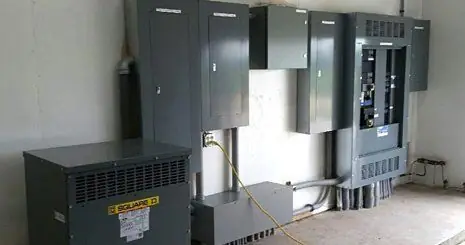
A panel upgrade is one of those jobs that sounds bigger than it is once you understand what's actually happening behind that metal door. Most homeowners who call us have one of a few things going on: breakers that trip when the air conditioner and the microwave run at the same time, a fuse box old enough that insurance won't touch the house, or a project on the horizon, a garage, a generator, an EV charger, that the existing panel simply doesn't have room for.
This part of Central Wisconsin has plenty of farmhouses and older homes where the electrical service has been added onto in pieces over fifty or sixty years, a fuse here, a sub panel there, whatever the previous owner needed at the time. A panel upgrade on a house like that is as much about untangling what's already there as it is about installing something new.
Why a panel gets upgraded in the first place
Not every panel upgrade starts with a failure. Some do: breakers that trip more often than they should, warm spots on the panel cover, a fuse box nobody's touched since it was installed decades ago. Just as many start with a plan, adding a sub panel for a detached garage, wiring in a transfer switch for a standby generator, or getting ahead of what an EV charger will actually draw. Either way, the panel is the one place in the house where every circuit meets, so it's usually the right place to start.
- A fuse box or an outdated panel brand no longer supported with replacement parts
- Breakers that trip during normal, everyday use rather than an actual overload
- Adding a generator transfer switch, an EV charger circuit, or a garage or addition sub panel
- A home inspection or insurance concern tied to the age or type of the existing panel
What we look at before we touch anything
Before any work starts we look past the panel itself. That includes the size and condition of the service entrance coming into the house, the grounding system, and how the existing circuits are actually wired behind the panel cover, not just what the labels say. A panel upgrade on a house with tired wiring behind the walls is really two conversations, not one, and we'd rather have that conversation up front than discover it partway through the job.
We also talk through what you actually want the panel to support going forward, not just what it needs to handle today. It costs very little extra to leave room for a generator transfer switch or an EV charger circuit while the panel is already open, and a lot more to come back and do it as a separate job later.
The day of the work
The house loses power for a window while the old panel comes out and the new one goes in, that's unavoidable since every circuit in the house runs through that one point. We schedule around that rather than around ourselves, so if there's a chest freezer or medical equipment in the house we plan for it.
- The main disconnect and service entrance conductors are inspected and reconnected to the new panel
- Every circuit breaker is replaced and reterminated, not just moved over as-is
- Grounding and bonding are brought up to current practice, not left as they were
- Every circuit is labeled and tested individually before we call the job done
What changes for you afterward
The most obvious difference is that nuisance tripping stops, but the part homeowners notice more over time is what the new panel makes possible: a clean spot to add a generator transfer switch when they're ready, capacity for an EV charger without a second electrical project, and breakers that actually match the panel they're installed in instead of decades of mismatched replacements. We give a free estimate before any of this starts, so there's no guessing at cost before you decide.
Bauer Electric Inc, (715) 258-2848
Call (715) 258-2848More articles
How Stray Voltage Shows Up in a Dairy Herd Before You Ever See a Number
The cows usually tell you something is wrong before any test does.
Standby Generators for a Rural Property: What the Transfer Switch Actually Does
The generator gets the attention. The transfer switch is what makes it safe.